Some of the information for this article has come from the Invasive Species Council (ISC) that has led the campaign to deal with one of the major sources of the invasive weed problem, escaped garden plants. Despite their threat, most invasive plants in Australia are not regulated and continue to be planted and introduced to new areas.
Australia's national weeds strategy was introduced in 1997 to provide a national framework for state, territory, regional and local governments to manage weed problems. However, it wasn't until June 2024 that there was an agreement to establish a specific action plan to address escaped garden plants after it was refused twice in 2009 and 2014. This time the federal Minister for Environment Tanya Plibersek, supported by state environment ministers, has agreed to develop a national Threat Abatement Plan to tackle escaped garden plants and aquatic weeds.
The issue of weed invasion from escaped garden plants was listed as a key threatening process under the EPBC Act in 2010. The governments’ argument up until now has been that the biosecurity laws were adequate to deal with the problem but their focus is on the importation of new plants not the problem that already exists from invasive weeds.
Extent of the problem
The ISC outlines the extent of the issue of weeds in NSW in the following points:
- More than $50 million of public money (about half from state government), supplemented by a large voluntary expenditure and effort, is currently being spent on weed control in NSW.
- However, the effort to control weeds is not keeping up with the rapid spread of weeds, and the NSW government has conceded it is unlikely to meet its 2015 target of ‘a reduction in the impact of invasive species’.
- Weeds imperil more than 40% of NSW threatened species (mostly plants) and about 90% of endangered ecological communities.
- 340 environmental weeds are recognised in NSW. Most were deliberately introduced as garden and pasture plants.
- There are already more than 30,000 exotic plant species in Australia (mostly cultivated), and more than 99% can be freely sold and planted in NSW. This includes many thousands of new potential weeds that can be introduced into NSW without risk assessment.
- Taking action on weeds creates substantial environmental, social and economic advantages.
- Weed management is one of the biggest gaps in NSW environmental laws and policies.
Plan for action
The ISC advocates a much stronger focus on prevention as many of Australia’s weeds are in a very early stage of invasion or not yet spreading. They're weeds that might have just started to establish locally, but we now understand they've got huge potential to explode across the landscape.
To do this, the ISC is asking each state and territory to require all new introductions into their states to pass a risk assessment. Only plants on a ‘safe list’ would be allowed to be sold or moved between states and territories. Some species already well entrenched would also be on this permitted list. This reversing the current practice where plants are not assessed until after they have become an invasion risk.
The Centre for Invasive Species Solutions — a not-for-profit collaboration between federal and state governments, CSIRO, and other member organisations — assesses the potential for a plant species to become invasive and recommends whether they are declared a noxious weed.
Stop the sale of existing and potential weeds
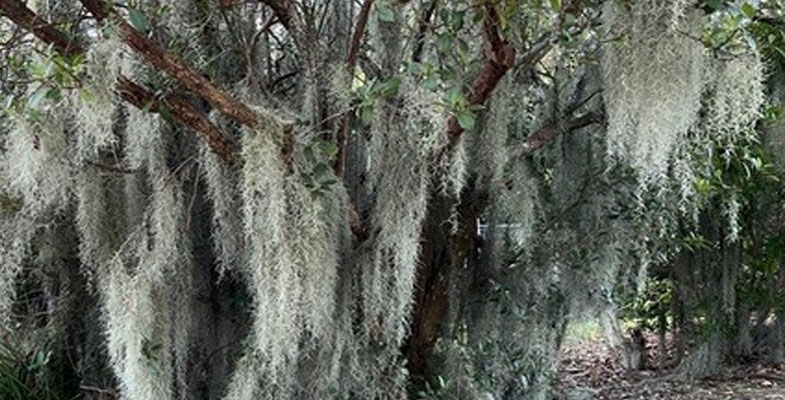
We need an agreement to assess the 30,000-plus plants we've got here and to identify which ones are known weeds, and which ones could become serious weeds, and to then ban and restrict their sale. One example is Spanish Moss that is termed to be a sleeper weed. As climate becomes warmer and wetter it is spreading and becoming more prolific.
At least three-quarters of weeds established in the Australian environment have come from escaped garden plants. Many of these invasives are pretty to look at, very hardy and don't need a lot of water. What makes them attractive for nurseries are the same things which makes them problematic as weeds. Gardeners looking for an easy fix, they are planting agapanthus for example, and they are spreading it unknowingly. The Blue Mountains is an area where it is a particular problem.
The ABC last year reported retail giant Bunnings was selling varieties of Gazania — an invasive flowering weed native to southern Africa — despite its status as a declared weed in Victoria (all subspecies), Queensland, Tasmania and New South Wales (Gazania rigens).
In the past 12 months, the ISC has identified a range of weeds for sale at nurseries, including mock orange (Murraya paniculata), duranta (Duranta erecta), mother-in-law's tongue (Sansevieria trifasciata), Japanese honeysuckle (Lonicera japonica) and English ivy (Hedera helix).
Current state government weed management framework in urban areas
At the state government level, weeds are managed under the Biosecurity Act 2015. This establishes a list of ‘priority weeds’ that are banned from being sold in NSW or certain regions of NSW. This does not mean that they have to be eradicated. In fact some are so well entrenched that removal is too costly or even feasible. This does not mean that we shouldn’t try to prevent the spread as much as possible.
Click here for a description of the process of risk management.
Management categories for priority weeds
Class 1 State Prohibited Weeds
Must be eradicated from the land and the land must be kept free of the plant, eg Boneseed, Hawkweed.
Class 2 Regionally Prohibited Weeds
Must be eradicated from the land and the land must be kept free of the plant, eg African Olive in the Blue Mountains.
Class 3 Regionally Controlled Weeds
Must be fully and continuously suppressed and destroyed and where applicable the plant must not be sold, propagated or knowingly distributed.
Class 4 Locally Controlled Weeds
For example blackberry, lantana, morning glory, Madeira vine (Anredera)
Class 5 Restricted Plants
Not yet established in NSW, must not be sold, propagated or knowingly distributed
Main weed management processes
- The NSW Weed Action Program that provides grants to local control authorities for weeds to enable them to undertake activities that focus on the prevention of priority weeds and their management.
- Regional Strategic Weed Management Plans that guide weed management in each of the 11 Local Land Services regions in New South Wales. These plans prioritise activities, clarify expectations and help guide investment to lead to more coordinated, efficient and effective weed management.
There are regional weed committees in each local land region that work on the strategic management plans. Within each region there are subgroups. For example, the Greater Sydney region has three subgroups under the Sydney Weeds Network.
Local council obligations
Apart from a state classifications that focus on high priority weeds, each local council has to establish a weed risk assessment process. This is used to set priorities for management on council land. There is a detailed rating system that considers factors like density, ability to spread and reproduce, economics of removal and geographical spread of infestation.
Local councils are authorised to issue a biosecurity directive to the owner or occupier of a property where priority weeds are sighted or reported. When a property owner or occupier is issued with a biosecurity directive, they have a legal obligation to control the weeds in the manner described by the risk rating, or as instructed by council in the biosecurity directive.
We all have an obligation to be on the lookout for biosecurity risks. They can be reported to your local council directly or reported on the Snap, Send, Solve app.
Key information can be found on the NSW Weedwise website or app.
Status of Spanish Moss
The current regional strategic weed management plan for Greater Sydney is due for renewal in 2027. Unfortunately, Spanish Moss has a low priority in our local council areas. We hope that evidence and consideration of the impacts of Spanish Moss will lead to its banning from sale under the new plan.
STEP and other local community groups are working with our local councils to raise awareness of this rapidly emerging problem.