In the Issue 209 we reported on the community concern about Ku-ring-gai Council’s determination to remove an illegal mountain bike tracks in North Wahroonga. Council staff met with the locals to discuss the issue. It turns out the young people involved are mainly interested in building rather than using the tracks.
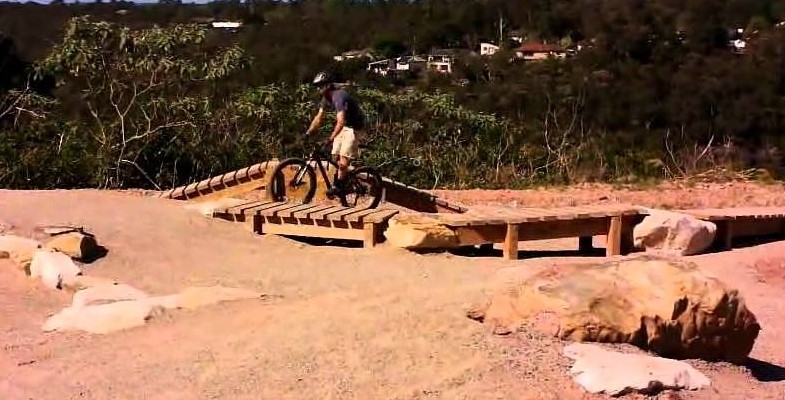
Council decided to invite the local riders to give their ideas for a redesign of the Jubes Mountain Bike track that is in the same area. The aim is to rebuild the track to make it a more exciting experience for riders.
The mountain bike track is located at the back of Golden Jubilee Field in Wahroonga that has become badly degraded. There is also a Pump Track and Skills Track nearby.
The Single Track trail has been excavated in preparation for new jumps to be built. Large piles of clay and sandstone crush have been provided by council for track and jump building. Mountain bikers are being invited to help construct the new tracks once excavation is completed by joining council’s Trailcare program. It is expected to open in August 2021.
In return for the creation of this partnership, the mountain bike community have pledged to be responsible for caring for the local environment and agreeing not to construct illegal jumps in the area. Time will tell!
Birdlife Australia’s regular newsletters have a regular series of snippets about well-known birds.
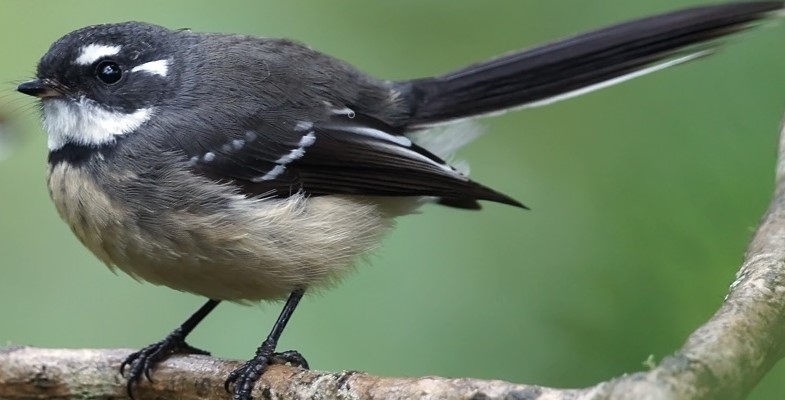
Here are some about the Grey Fantail, a bird that is common in Sydney bushland. Their call sounds like a squeaky violin.
Grey Fantails occur in pretty much every corner of the continent, inhabiting just about any terrestrial habitat you can name.
While some populations of Grey Fantails are resident, others are highly migratory, undertaking regular long-distance, seasonal movements. Tasmanian birds even migrate across the waters of Bass Strait, defying their apparently weak powers of flight.
The spectacular aerobatics performed by Grey Fantails while they are foraging involve such complex manoeuvres and flight sequences that they are impossible for any aircraft to replicate, even in theory.
The Grey Fantail’s nest is one of Australia’s neatest, with a long, pendulous tail that makes it look like a wine glass with the base of the stem broken off.
Although they are usually seen singly or in small numbers, Grey Fantails sometimes congregate into quite large flocks at the end of their migration, with dozens or maybe hundreds of birds gathering together. They also readily join mixed-species feeding flocks with other birds.
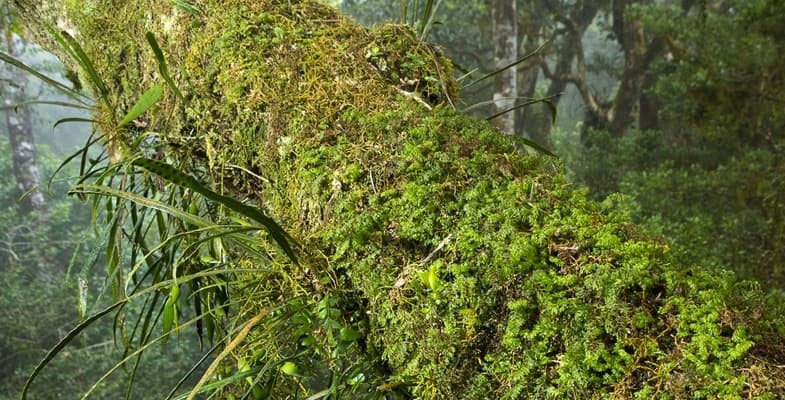
Staghorn ferns belong to a group of tree-dwelling plants known as epiphytes. Tree canopies are a challenging environment for plants to grow. Without access to soil, epiphytes are regularly exposed to severe water and nutrient stress.
Epiphytes have evolved several ways to mediate the lack of access to water and nutrients. Bromeliads grow cup-shaped leaves, while orchids have specialised root tissues. But staghorn ferns have developed a colony lifestyle to overcome the problem.
Staghorn ferns can be bought at many garden stores and will grow like any other pot plant. But in the wild on Lord Howe Island, we discovered individual plants collaborate, specialising in different tasks in the construction of the communal water and nutrient store, often at the cost of their own reproduction — just like social insects.
This radically changes our understanding of biological complexity. It suggests major evolutionary transitions towards eusociality can occur in both plants and animals. Plants and beehives aren’t as different as they might seem.
For decades, scientists interested in eusociality argued for a strict definition — many felt the term should be reserved for only a select group of highly co-operative insects.
This perspective led to widespread scepticism about its occurrence in the natural world. Perhaps this is why it was overlooked for so long in one of horticulture’s most popular pot plants.
Evolution of biological complexity
Four billion years ago, life began as simple, self-replicating molecules. Today’s diversity arose from these simple origins towards increasingly complex organisms.
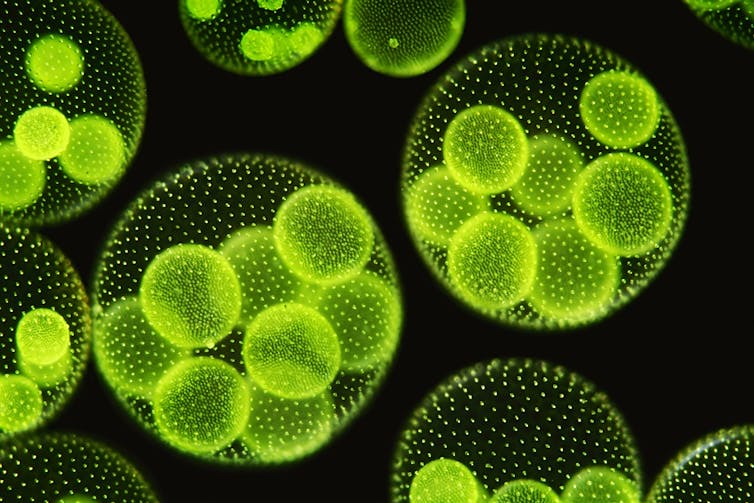
Evolutionary biologists think that biological complexity developed in abrupt, major evolutionary transitions, rather than slow and continuous changes. Such transitions occur when independent entities begin to collaborate, forming new, more complex life forms — such as, for example, when single-celled organisms evolved into multi-cellular organisms.
Early in the evolution of plants, single-celled algae joined to form more complex structures.Shutterstock/Lebendkulturen.de
Another example is the transition from unspecialised bacterial (prokaryotic) cells to cells with an enclosed nucleus and specialised organelles that perform particular functions, known as eukaryotic cells.
Co-operation underpins the evolutionary origins of organelles — they likely evolved from free-living ancestors that gave up their independence to live safely within the walls of another cell.
There are eight commonly recognised major evolutionary transitions — and eusociality is the most recent. Eusocial animals differ from others in three fundamental ways:
they live in colonies comprised of different generations of adults
they subdivide labour into reproductive and non-reproductive groups
they care for offspring co-operatively.
Our observations over the past two years on Lord Howe Island found staghorn ferns meet these criteria.
In highly eusocial species, caste membership is permanent and unchanging. But in primitively eusocial species, individuals can alter their behaviour to suit many roles required by the colony. Staghorn ferns probably fit under the latter category.
Our ongoing research will determine the staghorn’s position along this continuum of eusociality. But, for now, we know plants and animals share a similar evolutionary pathway towards greater biological complexity.