At last we have some good news to report. The country is breathing a sigh of relief following the defeat of the Morrison government, even expressing whoops of joy.
The major areas relating to the environment where we are hoping for big new effective policy change are outline below.
Energy
The new Albanese government has been thrown in the deep end with a crisis in energy supply. Gas and petrol prices have soared because of the war in Ukraine. Electricity has been in short supply because of the failure of several coal-fired power stations, the need to use expensive gas and the rise in demand in response to the cold snap. All these factors highlight the abysmal management and policies of the Morrison government.
At last we will see some real action with rapid expansion of the transmission grid to facilitate the use of renewable energy and more support for these projects. There is more positive action proposed to support the transition to use of electric vehicles. These actions will take time to be effective but 2030 is not far away!
The emissions reduction target will be improved to a 43% reduction below 2005 levels by 2030. This is still viewed as inadequate by the Climate Council and the ‘teal’ candidates. Labor is still not strong enough on closing down coal mines and stopping new projects.
A review will be held of Australia’s controversial carbon offset programs, to be conducted independently of government departments and agencies. This is vital for the effectiveness of plans to reach net zero emissions – see the previous STEP Matters.
Land clearing
Labor has promised to set a domestic target to protect 30% of land and 30% of sea areas by 2030.
Great Barrier Reef
Labor has promised to increase funding to tackle agricultural pollution, more sustainable fishing practices and research into thermal tolerant corals. But the really meaningful solution is rapid reduction in carbon emissions
Murray–Darling Basin
After years of the Nationals favouring big irrigators and undermining the Murray– Darling Basin Plan, the new government has a chance to restore more natural flows to the rivers of the Murray–Darling Basin, establish integrity and transparency for water management, and get the plan to revive our rivers back on track.
The review of the Murray–Darling Basin Plan will occur during this term of parliament, so there is the possibility of increasing water recovery targets towards what the science says is necessary for healthy rivers, wetlands and floodplains.
Biodiversity
The previous environment minister, Sussan Ley, refused to release the State of the Environment Report that was finalised last December. The new Minister for Environment and Water, Tanya Plibersek has indicated that it tells an ‘alarming story’ of decline, native species extinction and cultural heritage loss. She will release the report in a speech to the National Press Club on 19 July.
Labor has promised to create a federal Environmental Protection Agency to improve environmental compliance, information and analysis. We hope this agency will be genuinely independent and have real teeth.
Furthermore, there’s been a failure to address one of the most egregious failings of our system which is to evaluate cumulative impacts of projects on the environment as opposed to a license by license approach.
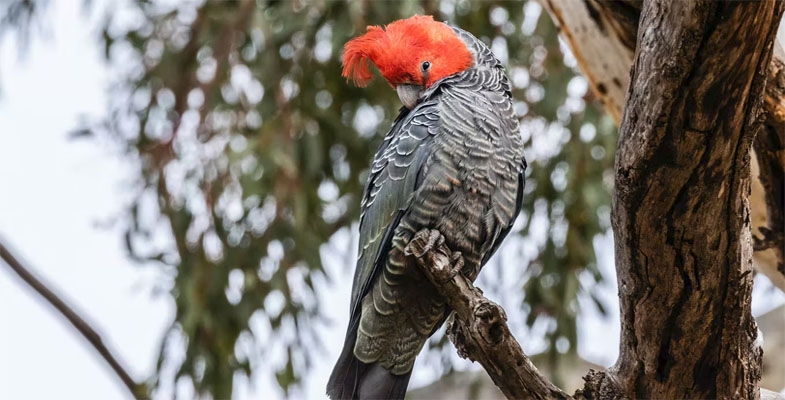
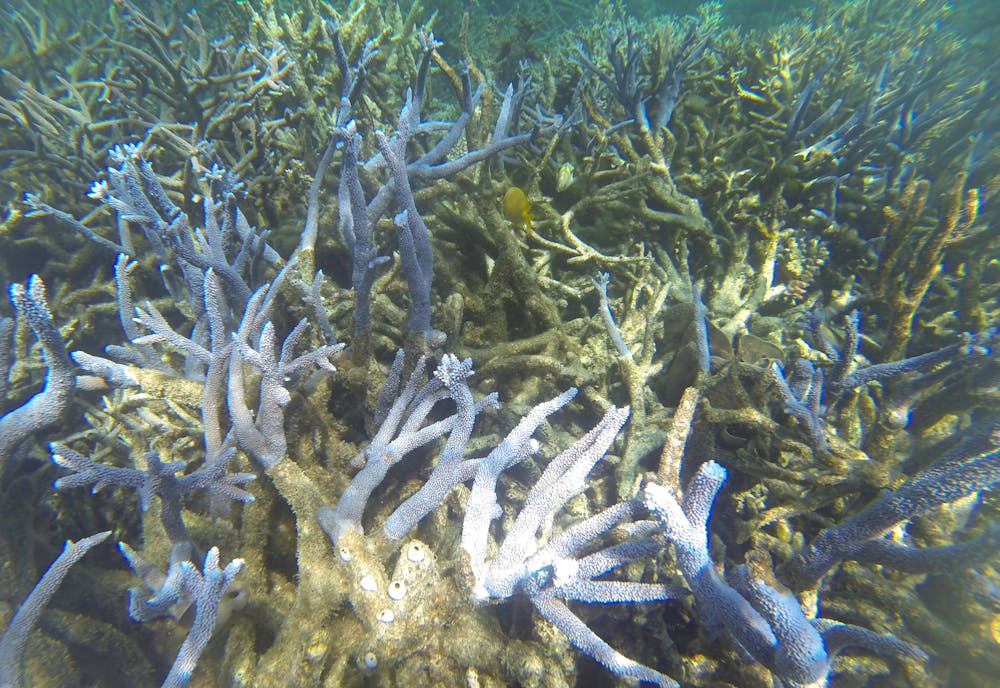
Australia is losing more biodiversity than any other developed nation. Already this year the charismatic and once abundant gang gang cockatoo has been added to our national threatened species list, the koala has been listed as endangered and the Great Barrier Reef suffered another mass bleaching event.
The Australian public consistently rates the loss of our unique plants and animals as a key concern. Indeed, in a recent poll of 10,000 readers of The Conversation, 'the environment' was identified as the second-biggest issue affecting their lives, behind climate change at number one.
The Coalition has been in government since 2013. So what has it done about the biodiversity crisis? Unfortunately, the state of Australia’s plants, animals and ecological communities suggests the answer is - not nearly enough.
In fact, as the extinction crisis has escalated, protection and recovery for threatened species has declined. Poor decisions are contributing to the problem, rather than solving it.
The sorry state of Australia’s biodiversity
Australia has formally acknowledged the extinction of 104 native species since European colonisation, but the true number is likely much higher.
Threatened bird, mammal and plant populations have, on average, halved or worse since 1985. Species recently thought to be safe – such as the bogong moth, gang gang cockatoos, and even the iconic koala – are being added to the global and national threatened species lists following drought, catastrophic fires and habitat destruction.
The federal government listed the koala as an endangered species in February this year.Shutterstock
Today, 19 ecosystems show clear signs of collapse. This includes the Great Barrier Reef, savannas, mangroves, tropical rainforests, and tall mountain ash forests. These losses have profound ramifications for clean air and water, productive agriculture, pollination, and well-being.
Biodiversity is a crucial part of Australia’s national identity and Aboriginal culture. It delivers billions of dollars in tourism revenue and underpins most sectors of our economy.
It’s important for our health, too. COVID lockdowns recently brought the critical role of nature to our well-being into sharp focus, with thriving biodiversity shown to deliver avoided costs to the healthcare system.
Ignoring key recommendations
A 2018 Senate inquiry into the extinction crisis of Australian animals (fauna) concluded that native fauna was declining. It found biodiversity protection was under-resourced and failing, and Australia urgently needs an independent environmental regulator.
In 2022, the federal Auditor-General reviewed the government’s implementation of Australia’s threatened species legislation, finding:
limited evidence that desired outcomes are being achieved, due to the department’s lack of monitoring, reporting and support for the implementation of conservation advice, recovery plans.
The national Threatened Species Strategy focuses on 100 species and a few iconic places. But more than 1,800 species and ecosystems are threatened with extinction.
And economic analyses indicate we currently spend about around 7% of the targeted A$1.6 billion per year required to halt species loss and recover nationally listed threatened species.
These findings were reinforced in 2020 by a major independent review of Australia’s environment law – Environment Protection and Biodiversity Conservation (EPBC) Act.
The review by Professor Graeme Samuel made 38 recommendations, but almost none have been implemented. They include establishing an Environment Assurance Commissioner, rigorous national environmental standards and resourcing compliance and enforcement of environmental regulations.
Failure to protect what we have
Land clearing is a key threat to Australian wildlife, yet the government has not made meaningful progress to halt it.
The hectares cleared in New South Wales over the last decade have tripled, and a staggering 2.5 million hectares have been cleared in Queensland between 2000 and 2018.
Worryingly, more than 7.7 million hectares of threatened species habitat have been cleared since the EPBC Act came into force (between 2000 and 2017), including 1 million hectares of koala habitat.
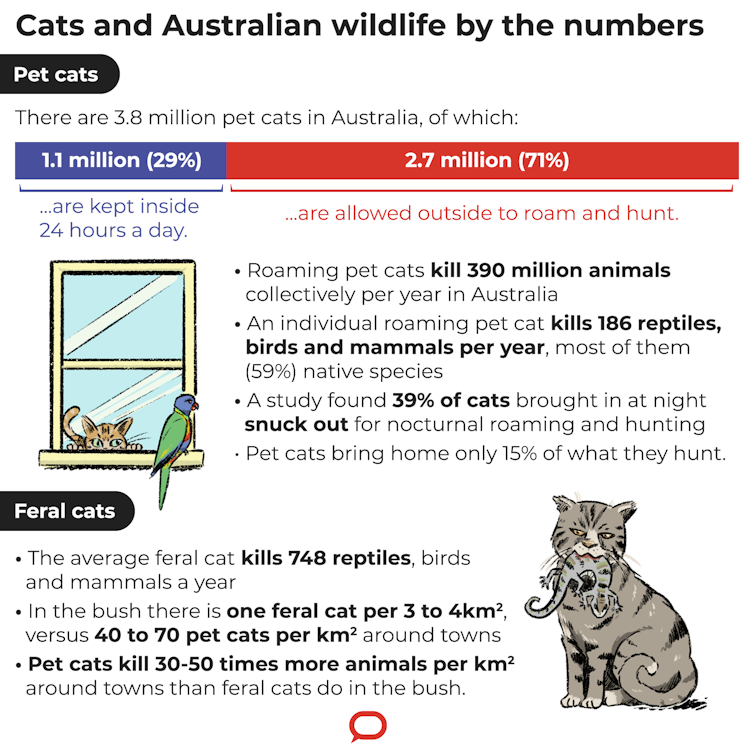
Cats alone kill 1.7 billion native animals each year and threaten at least 120 species with extinction. While feral predator control has received some focus, the effort still falls well short of what’s required.
Officialreviews have consistently found the federal government’s approach to protecting biodiversity lacks transparency and accountability.
Questions have also been raised about the federal government’s delay in releasing its five-yearly State of the Environment Report ahead of the election.
And investigations have raised serious concerns about how the government handled decisions regarding grasslands illegally destroyed by a company part-owned by a government minister.
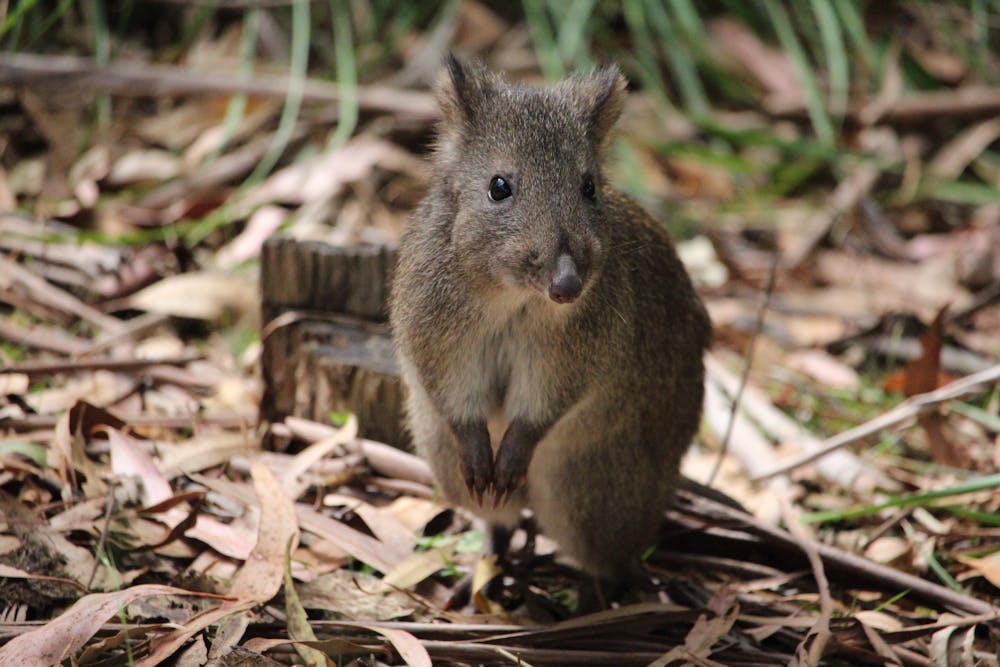
The long-nosed potoroo is extremely vulnerable to cats and foxes.Shutterstock
A key advisor to the government recently labelled a major scheme to promote forest restoration as carbon credits as environmental and taxpayer 'fraud'.
The government also continues to back activities that cause damage to biodiversity, including the fossil fuel and forestry industries.
On agriculture, the government is pursuing a 'biodiversity stewardship' policy, to financially reward farmers for protecting wildlife.
But ongoing approval of unsustainable land management practices, particularly land clearing (of which agriculture is responsible for the lion’s share) will likely overshadow any stewardship gains.
The 26 Australian frogs at greatest risk of extinction | Threatened Species Recovery Hub.
So what’s needed to prevent future extinctions?
Labor has not yet revealed its full suite of environment policies. This week it told Guardian Australia it will release more details before the election, and has called on the government to release the State of the Environment report.
So what policies are needed to reverse the biodiversity crisis? The answer is: spend more and destroy less.
Just two days of Coalition election promises (estimated at $833 million per day) would fund recovery for Australia’s entire list of threatened species for a year.
Systems for protecting biodiversity need stronger legal mandates and less discretion for ministers to override decisions about project approvals, species listing and other matters.
Biodiversity should be integrated into key aspects of government practice. For example, it makes no sense to invest in protecting koalas while simultaneously approving koala habitat clearing.
And we need investment in every threatened species, not just a hand-picked few.
The Great Barrier Reef this year suffered the fourth mass bleaching event since 2016.Shutterstock
Finally, transformative policies are needed to support the substantial opportunities to enhance and restore biodiversity. This includes:
The fate of nature underpins our economy and health. Yet in the election campaign to date, there’s been a deafening silence about it.
Sarah Bekessy, Professor in Sustainability and Urban Planning, Leader, Interdisciplinary Conservation Science Research Group (ICON Science), RMIT University and Brendan Wintle, Professor in Conservation Ecology, School of Ecosystem and Forest Science, The University of Melbourne
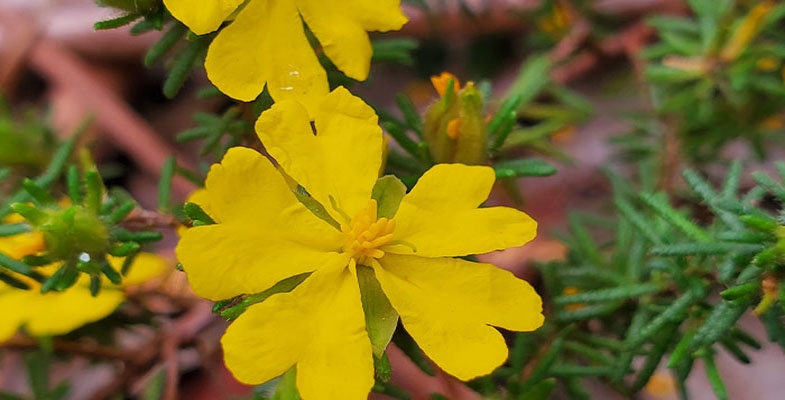
On 10 May 2022 Chantelle Doyle gave our members a presentation on her extensive PhD work on conserving Hibbertia spanantha. Her work is also investigating threatened species conservation through the practice of translocation. Unfortunately it is inevitable that rare plants are destroyed when a development site is cleared unless they can be moved to a suitable site elsewhere.
H. spanantha was originally known from only four populations in the Sydney Basin Bioregion and is on the Threatened Species Recovery Hub Hottest 100 list of plants most at risk of extinction.
Chantelle’s talk described her analysis of:
What are the best methods for vegetative and seed propagation of H. spanantha?
What are the best soil and pre planting treatments?
What post planting maintenance is required?
This information together can inform the key factors to consider when implementing conservation actions and identify challenges to following best practice translocation guidelines.
The recent issue of the Friends of Lane Cove National Park newsletter, Regenavitis reports on the work of park staff and volunteers in helping with the Ryde planting near the crematorium. They will help care for the plants in the long term through weed suppression and, potentially, ecological burns to facilitate a self-sustaining population through natural recruitment.
Annual research grant
STEP has awarded our annual research grant to Chantelle to assist her with her work. Funds from STEP will enable ongoing monitoring of the three translocated populations (ex situ population at Hornsby and augmentations at Ryde and Cheltenham).
Trees play an important role in defining the character of Ku-ring-gai. Council has been going through a process to develop a new strategy for managing forest over two years. The starting point was an Urban Forest Policy that is a short statement of principles and objectives.
During 2021 feedback was collected from the community and advice sought from expert consultants that have informed a draft Urban Forest Strategy which will define how council manages and improves our urban forest for current and future generations.
Council is now publicly exhibiting the draft document and gathering ideas about how the strategy can be successfully implemented. Have your say now. The closing date is 5 pm on Friday 8 July.
The strategy will cover trees and vegetation in:
public parks, streets and commercial areas
private gardens, schools and other developments
council managed bushland and reserves
The management of the urban forest needs to take into account the whole ecosystem that supports the trees and plants, including the soil and fauna that are essential for the health of the vegetation plus the availability of a water supply.
Ku-ring-gai Council has described the municipality as the ‘green heart’ of Sydney. This creates an attractive environment for residents. Trees also provide many other environmental benefits that are described in the strategy.
The draft Strategy includes ambitious goals to increase the tree canopy coverage. However the urban forest needs to be looked after by all residents. There are pressures that will work against the goals for improving the health and extent of the urban forest such as climate change, development and preferences changing towards very tidy easy-care gardens.
Tradescantia fluminensis, commonly known as wandering trad is one of the worst weeds in Sydney’s bushland and home gardens. This highly invasive weed rapidly takes over the ground layer in gullies and temporary watercourses, forming a thick blanket of leaves that excludes light and warmth. Trad aggressively smothers low plants and seedlings and cools the soil, preventing native plant germination and regeneration.
This plant spreads vegetatively, no seed is produced. Garden refuse dumped in bushland is a common form of spread. Stem fragments and roots readily wash down waterways or spread in mud from vehicles. Trying to remove trad is a very time-consuming process. Repeated follow up is required because a tiny stem or leaf left behind can regrow.
But now there is hope of a solution, a leaf-smut fungus called Kordyana brasiliensis. This agent was discovered on wandering trad during surveys in Brazil performed by researchers at the Universidade Federal de Viçosa. This exploratory research was part of the biocontrol program for this weed in New Zealand, led by Landcare Research.
After years of testing in Brazil, in New Zealand and in the CSIRO containment facility in Australia, researchers applied for approval to release the leaf smut fungus. They were granted approval by the Department of Agriculture and Water Resources in December 2018.
Researchers first released the leaf smut fungus at ‘nursery sites’ in the Dandenong Ranges during the cooler months of 2019. Nursery sites are areas where our staff will monitor the progress of the biocontrol agent to ensure it can survive and spread in the local area and is having a damaging effect on the wandering trad.
A new project from July 2020 to June 2023, co-funded by CSIRO and the NSW government through its Environmental Trust, is facilitating stakeholders’ releases of the fungus across the range of wandering trad in NSW. The project will also monitor the impact of the fungus on the weed and flow-on indirect impact on other vegetation at several sites during that period.
Ku-ring-gai Council is participating in the project and has released infected trad plants in several sites. It has been spreading rapidly in some sites such as the Gordon Flying Fox Reserve. The very damp conditions experienced over the past few months may be a factor. In other sites the spread has been fairly slow.
How it works
The leaf smut fungus (K. brasiliensis) spreads through spores, and it needs wandering trad leaves to survive. This pathogen enters wandering trad through the leave’s air holes (stomata), and slowly uses the weed’s energy for its own fungal growth. After two to three weeks, the leaves begin to develop yellow spots, caused by a lack of chlorophyll. Eventually the fungal infection is so severe that the wandering trad leaves die. The sick plant becomes less competitive against neighbouring native plants, giving them an advantage, and the opportunity to grow.
Don't worry, it's not another cane toad. It has been carefully tested by the CSIRO and only infects trad and not its close native relative Commelina which has blue flowers. The fungus needs the leaves of the wandering trad to survive – if there is no wandering trad to infect, the fungus dies.
Benefits of biocontrol agents
Biological control is the practice of managing a weed by deliberately using one or more of its natural enemies (biocontrol agents) to suppress it.
Specialised fungi, like the leaf smut, have specific genes that enable them to successfully infect and cause disease only on single or a narrow range of plant species. Testing involved looking at plants that are related to wandering trad including native plants to make sure the fungus will only infect the weed.
CSIRO field biologist Dr Ben Gooden, who is coordinating the rollout of the biocontrol program across Australia, said highly targeted and tested biocontrol agents like the fungus were a more environmentally sustainable option than other available tools. Scientifically tested biocontrol agents like this fungus provide a longer term, environmentally sustainable way of controlling weeds like wandering trad, without harming Australian plants or animals.